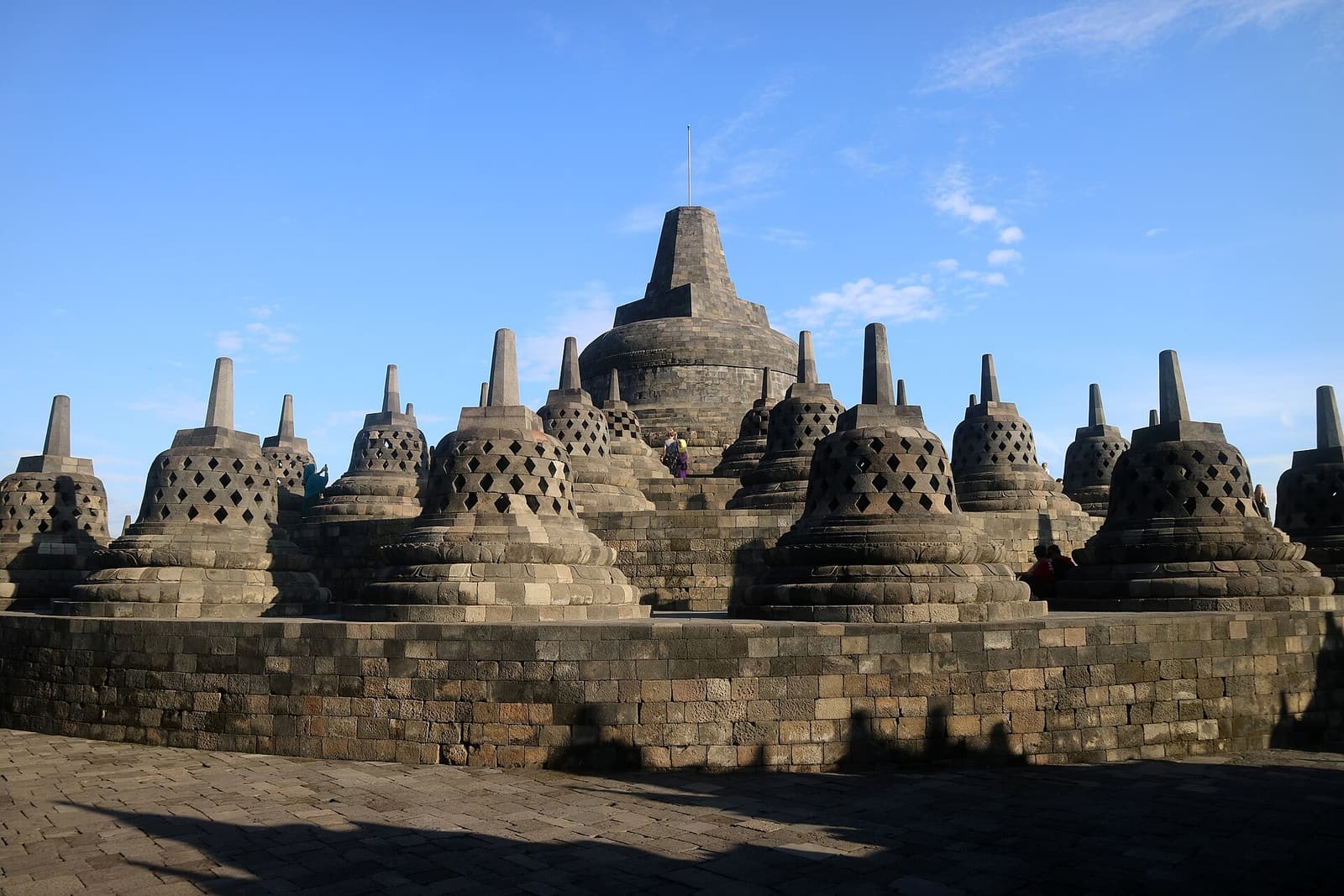
Borobudur stands on a low hill in the Kedu Plain near Magelang, about 40 km north-west of Yogyakarta. It was built by the Sailendra dynasty around the late 8th and 9th centuries from some two million blocks of volcanic stone, with no mortar: six square terraces topped by three circular ones and a great central stupa.
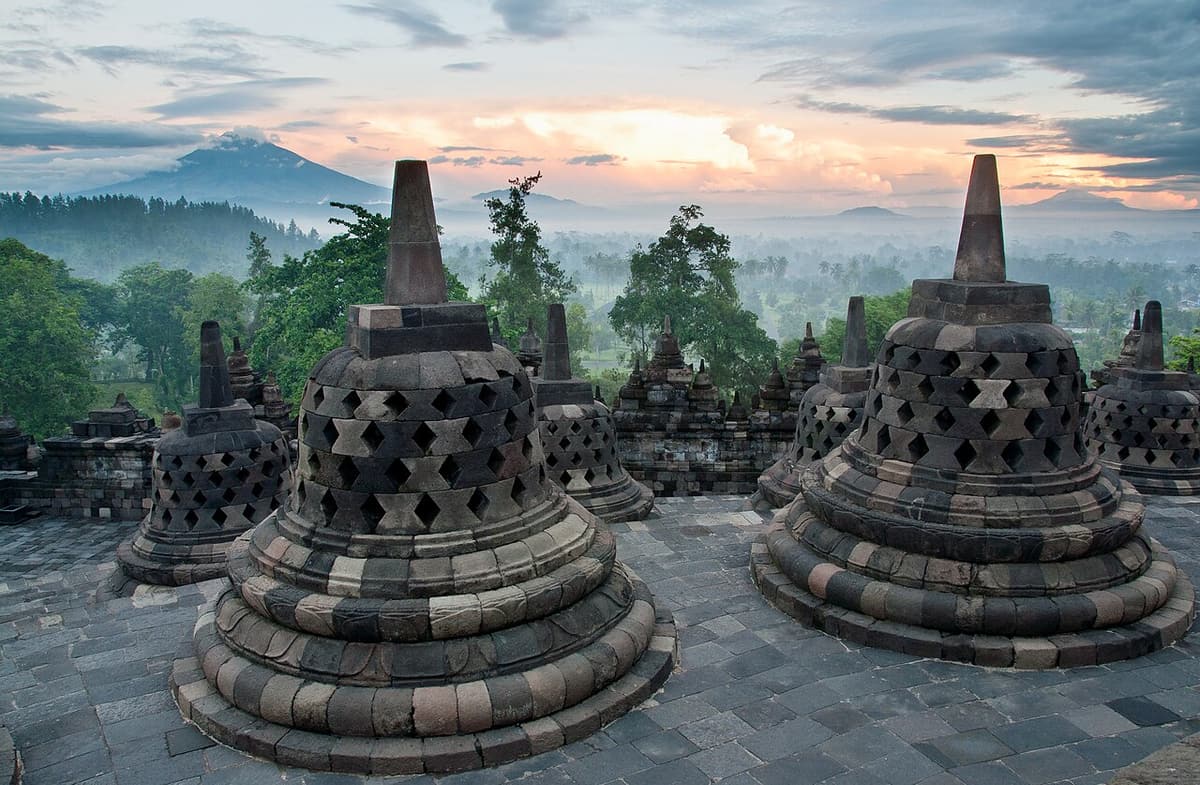
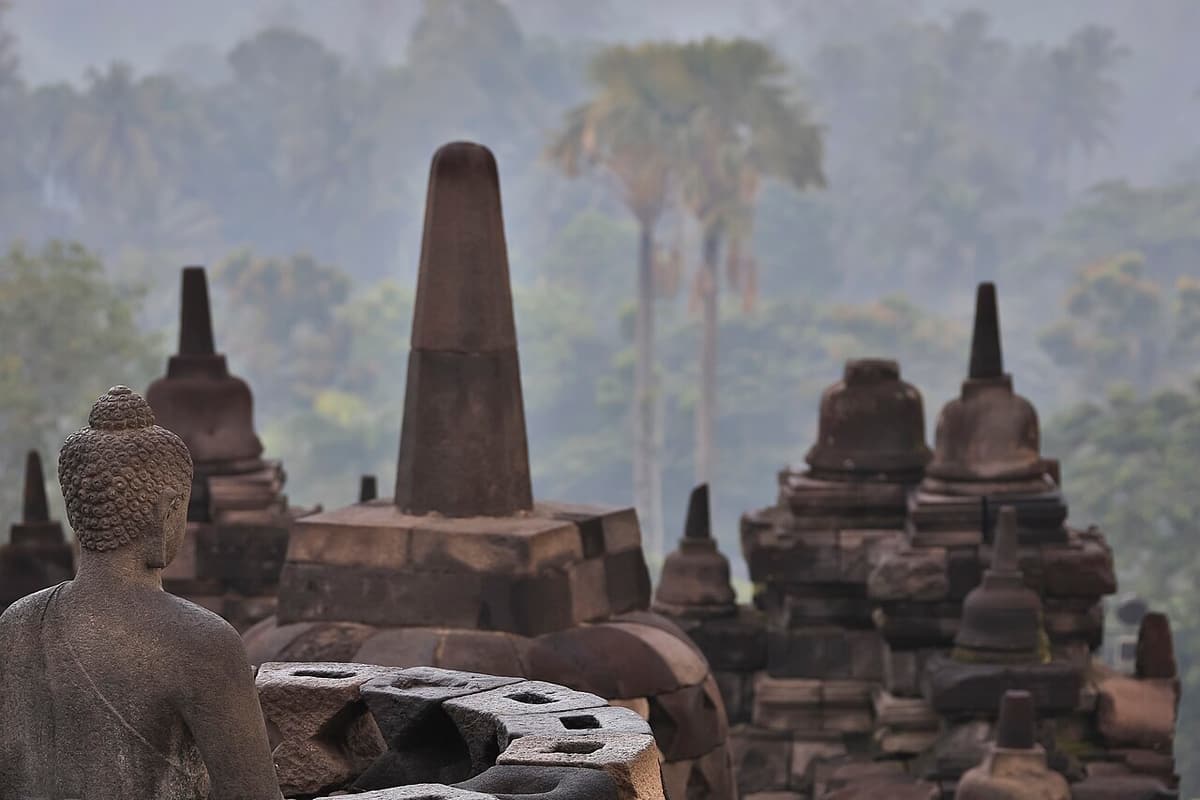
The monument is a three-dimensional diagram of the Buddhist path. Pilgrims walk clockwise up through galleries lined with more than 2,600 relief panels, from scenes of earthly desire to the life of the Buddha, and emerge onto the open upper terraces among 72 perforated stupas, each sheltering a seated Buddha. Abandoned and buried for centuries, it was brought to wider attention in 1814, restored in a major UNESCO project in the 1970s and 80s, and listed as World Heritage in 1991.
What to see and do: Borobudur
Climb the monument
Access to the structure itself is controlled to protect the stone: visitors go up in guided, timed groups, in limited numbers each day, wearing the soft sandals provided. The ground-level ticket only lets you walk around the base.
See the sunrise
Dawn over the plain, with Merapi and Merbabu on the horizon, is the classic Borobudur experience. Arrangements for sunrise change; many tours now watch from Punthuk Setumbu hill or nearby and then enter the temple when it opens.
Read the reliefs
With a guide, follow a few of the story panels on the lower galleries — ships, palaces, markets and musicians of 9th-century Java carved in remarkable detail.
Add Mendut and Pawon
Two small temples on the same ancient axis a few kilometres east; Mendut houses a superb three-metre seated Buddha.
How to get to Borobudur
- From Yogyakarta: about 40 km, 1–1.5 hours by car. Public buses run from Jombor and Giwangan terminals to Borobudur terminal.
- From Jomblang: Borobudur and Jomblang are on opposite sides of the city, around 90 km apart. Do them on separate days.
- By tour: the easiest way to secure climb-up tickets — see our recommended temple tours.
Insider tips
- Climb-up tickets are limited by a daily quota and often sell out days ahead in high season. Book online in advance or through a tour that includes them.
- The monument has had a weekly closure day for the upper structure and is busy or restricted around the Buddhist festival of Waisak; check the official schedule for your date.
- Tickets for foreign visitors cost many times the domestic price, and the climb-up ticket costs more than ground access. Confirm current rates before you go.
- Dress modestly, with shoulders and knees covered. There is almost no shade; bring water and a hat.
- Jomblang needs a late-morning slot and Borobudur an early one, so the two do not combine well in a day — plan one morning for each.
Best tours & tickets for Borobudur
These top-rated experiences are the easiest way to visit Borobudur from Yogyakarta:
Temple tour from $17 Yogyakarta: Borobudur Sunrise (Guaranteed Climb-up) & Prambanan
The most-reviewed temple tour from Yogyakarta, with well over two thousand reviews. Access to the upper terraces of Borobudur is rationed by a daily quota with timed slots, and this tour’s selling point is handling that for you. Entrance tickets for foreign visitors are a significant extra — check exactly what your option includes.
- Sunrise near Borobudur, then onto the monument itself
- Help securing a climb-up slot under the daily quota
- Optional Prambanan in the same day
Temple tour from $25 Yogyakarta: Borobudur 5-hour Tour with Climb-up & Transfers
If you want Borobudur without a 3 a.m. alarm or a second temple, this half-day group tour does exactly that. It leaves the rest of the day free — or lets you pair Borobudur and Jomblang on consecutive mornings.
- Borobudur only, in half a day
- Climb to the upper terraces with a guide
- Small group with transfers