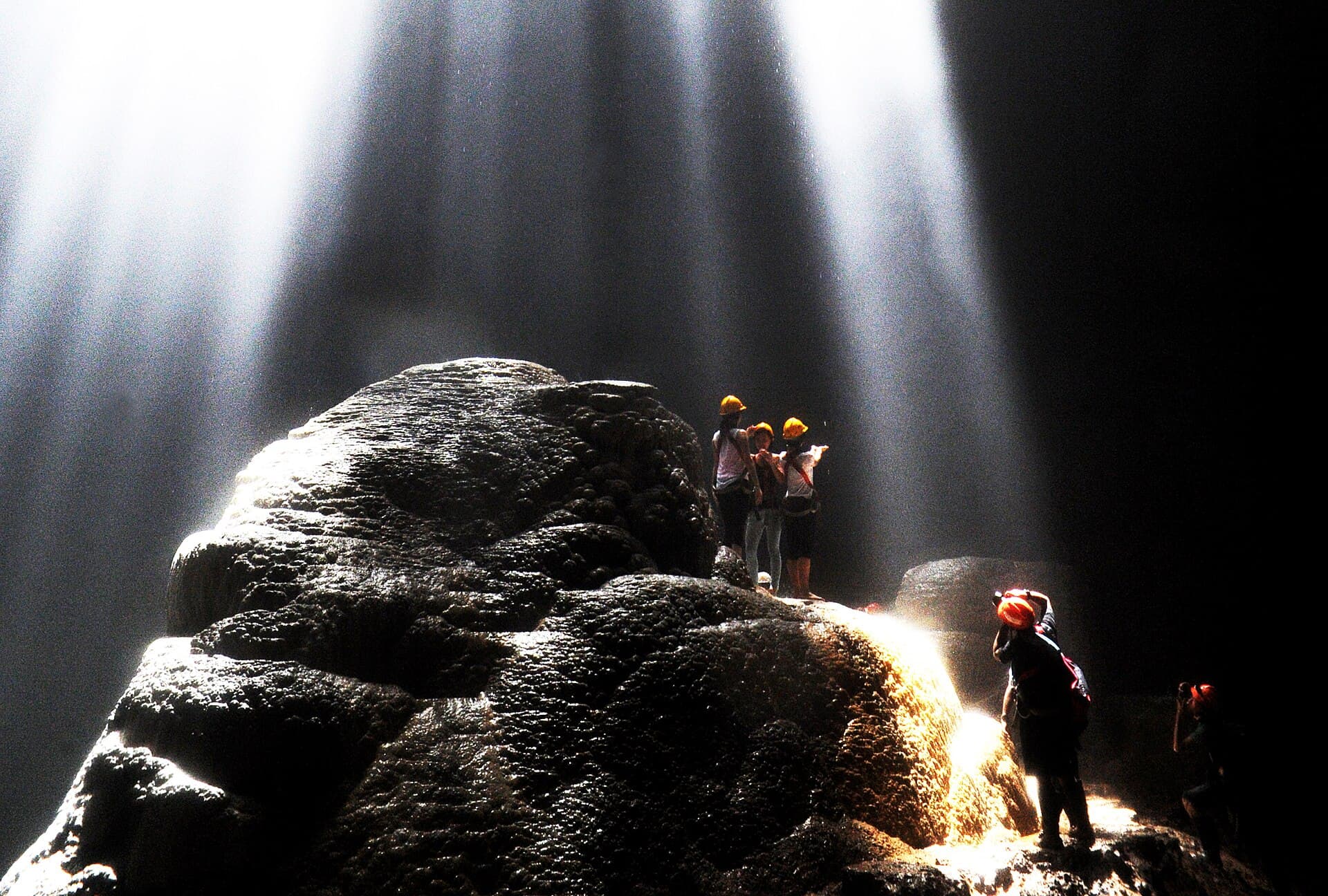
Jomblang Cave is a single, well-organised adventure that takes about three to four hours on site. It is simple to do, but it runs once a day with limited places, so a little planning goes a long way.
Jomblang in a nutshell
- What it is: a collapse sinkhole (luweng) about 50 m wide in the Gunung Sewu karst, connected by a tunnel to Grubug Cave.
- What you do: get lowered about 60 m on a rope, walk through a sunken forest and a 250–300 m muddy tunnel, and stand in the “light of heaven”.
- Where: Jetis Wetan, Pacarejo, Semanu, Gunungkidul — about 50 km from Yogyakarta.
- When: one session each morning; the light is best around 10:00–12:00 on sunny days.
- How long: most of a day including the return drive from the city.
A little background
Gunungkidul sits on the Gunung Sewu — the “thousand mountains” — a belt of tropical cone karst stretching along Java’s south coast, riddled with sinkholes, caves and underground rivers, and recognised as a UNESCO Global Geopark. Rain disappears into the limestone almost at once, which is why the surface is dry and the water runs far below.
Jomblang formed when the roof of one of those underground voids collapsed. Local cavers had explored the system for years before it was opened to visitors in the early 2010s by a Yogyakarta caver who built the simple basecamp above the cave. Television coverage, including an appearance on the American programme The Amazing Race, brought it international attention.
How the visit works, step by step
- Arrive and register (about 8:00–9:00). You sign in, pay if you have not prepaid, and are given rubber boots, a helmet and a harness.
- Briefing and wait. Visitors go down in turn, usually two at a time, so there is some waiting at the rim.
- The descent (from about 9:00–10:00). You are lowered by the rope crew; it takes a few minutes.
- The forest and the tunnel. Once the group is down, guides lead the walk to Grubug — 10–15 minutes on mud and stepping stones.
- The light (roughly 10:00–12:00). Thirty minutes to an hour in the chamber for photographs.
- Back and up. Return through the tunnel and wait your turn to be hauled up by the crew.
- Lunch at the basecamp, usually a boxed Javanese meal, around 13:00.
Price and what is included
The price most widely quoted for the cave itself is around IDR 500,000 per person, the same for domestic and foreign visitors. It normally includes the rope descent and ascent, safety equipment, rubber boots, helmet, a guide and a lunch box, often with drinking water. Prices are set by the operator and do change, so treat this as an indication and confirm the current rate.
Transport from Yogyakarta is separate unless you book a tour that bundles everything. Small extras — parking, tips for guides or the rope team, washing facilities — are modest; carry some small notes.
| Item | Typical arrangement | Notes |
|---|---|---|
| Cave entrance & descent | Around IDR 500,000 per person | Check current rate; cash is safest |
| Boots, helmet, harness | Included | Boots in common sizes; bring long socks |
| Guide | Included | Indonesian and basic English |
| Lunch | Usually included | Simple boxed meal; tell them if vegetarian |
| Transport from Yogyakarta | Not included | Tour or private driver |
| Photographs | Guides often help for free or a tip | Bring your own camera or phone |
 Inside Jomblang Cave
 Jomblang Cave
A 60-metre rope descent into a collapsed cave
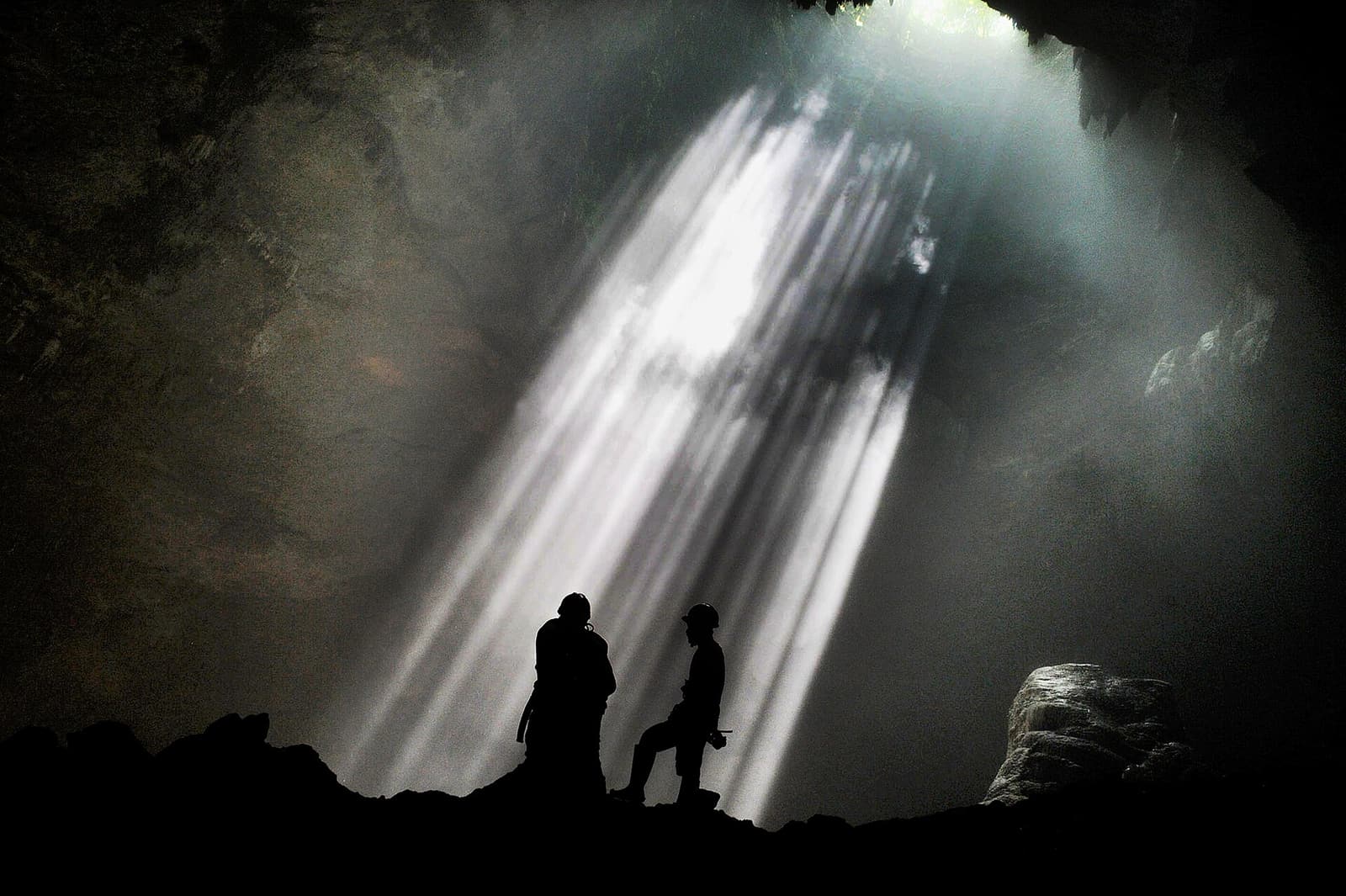
Goa Jomblang is a vertical cave — a sinkhole around 50 metres across, formed when the roof of a cavern collapsed. Visitors are lowered on ropes about 60 metres to a floor covered in forest, then walk through a dark tunnel to neighbouring Grubug Cave, where sunlight falls through the roof in a single beam.
 Inside Jomblang Cave
 Light of Heaven (Grubug Cave)
The sunbeam everyone comes to see
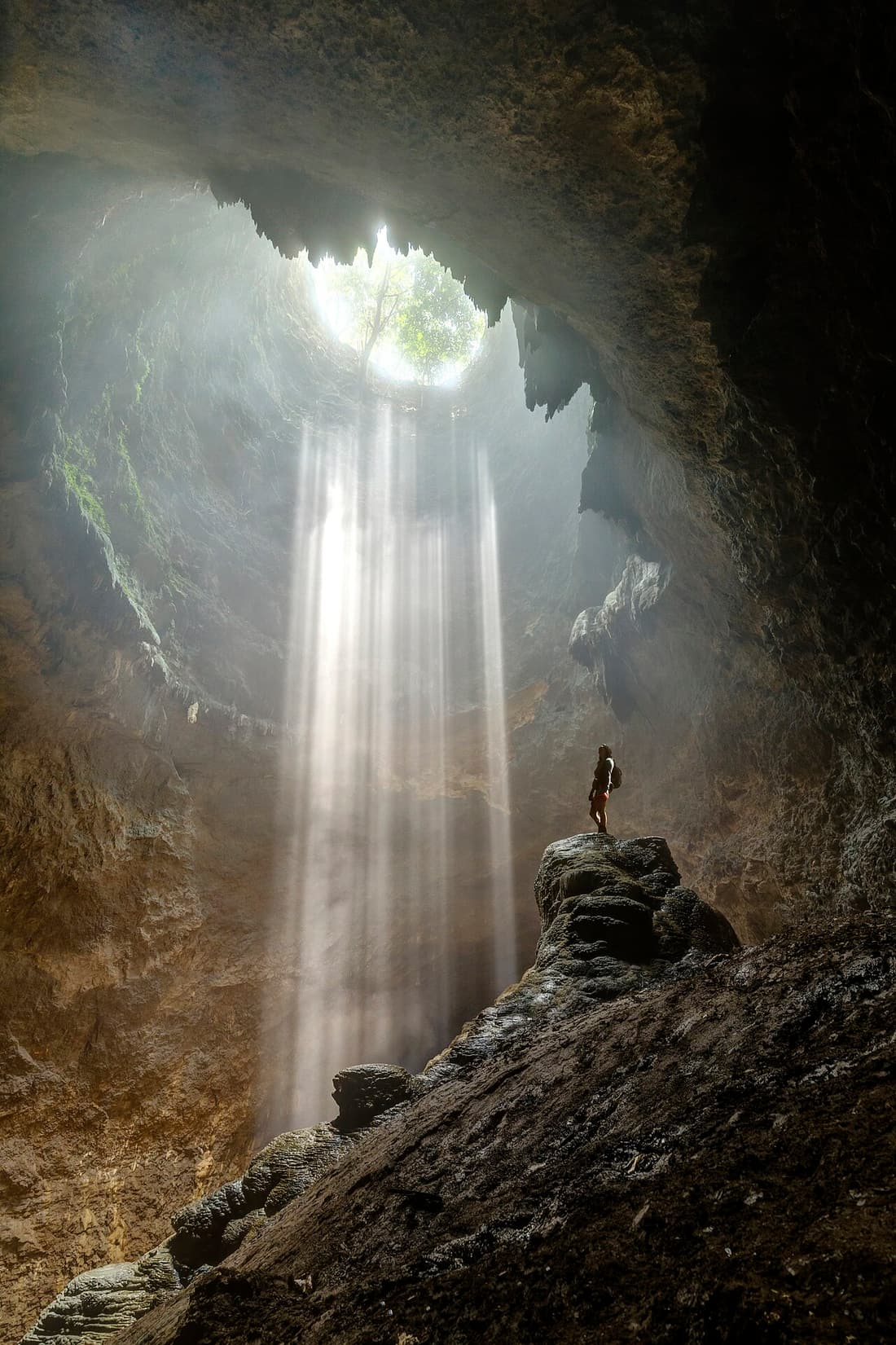
At the end of the tunnel from Jomblang lies Luweng Grubug, a shaft roughly 90 metres deep. Around midday on clear days the sun shines straight down it, and the light catches the mist in the chamber as solid-looking rays — the “cahaya surga”, or light of heaven.
 Gunungkidul: caves, coast & karst
 Pindul Cave & Oyo River
Float through a cave on an inner tube
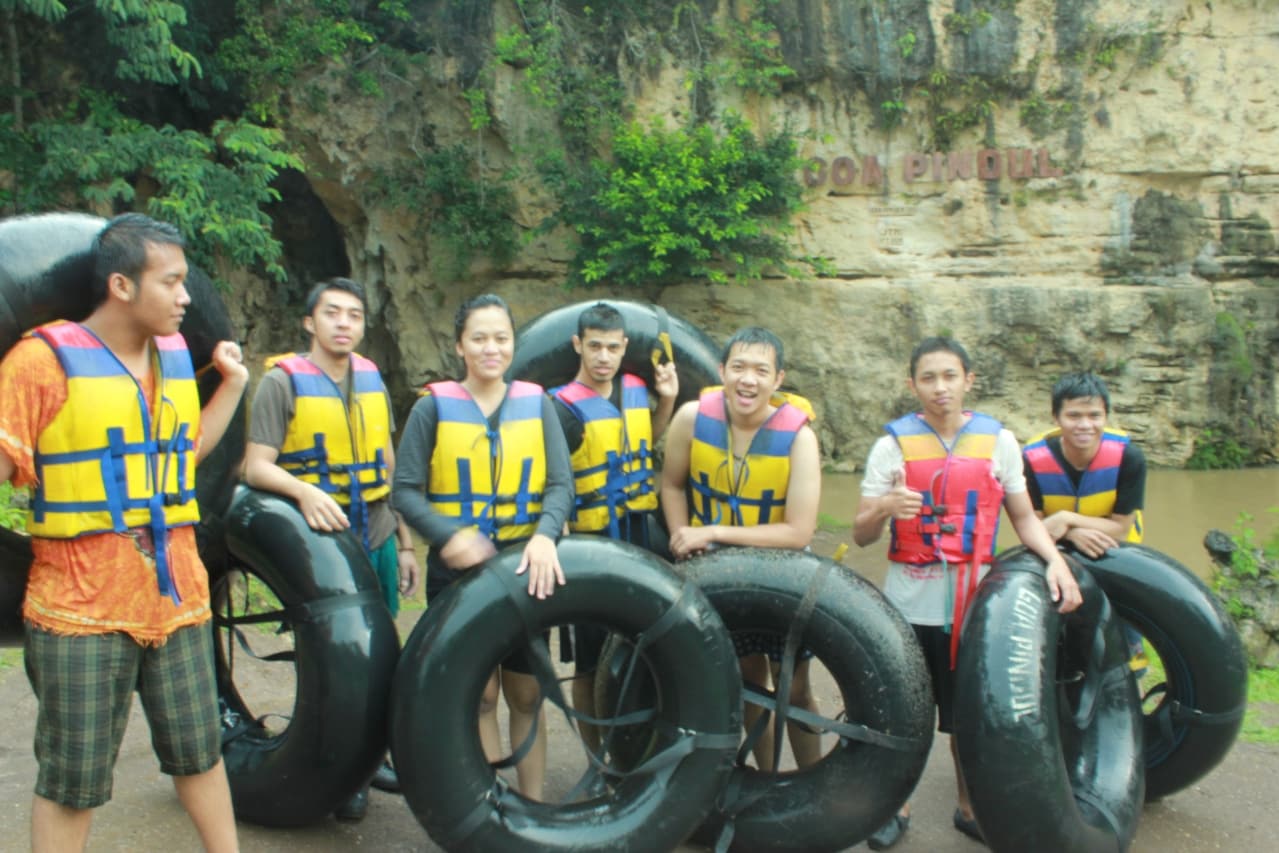
Half an hour or so from Jomblang, Gua Pindul is a short flooded cave you drift through in a rubber tube, past stalactites and under a skylight in the roof. Most visitors add tubing on the nearby Oyo River, with its small waterfalls and jumping rocks.
 Gunungkidul: caves, coast & karst
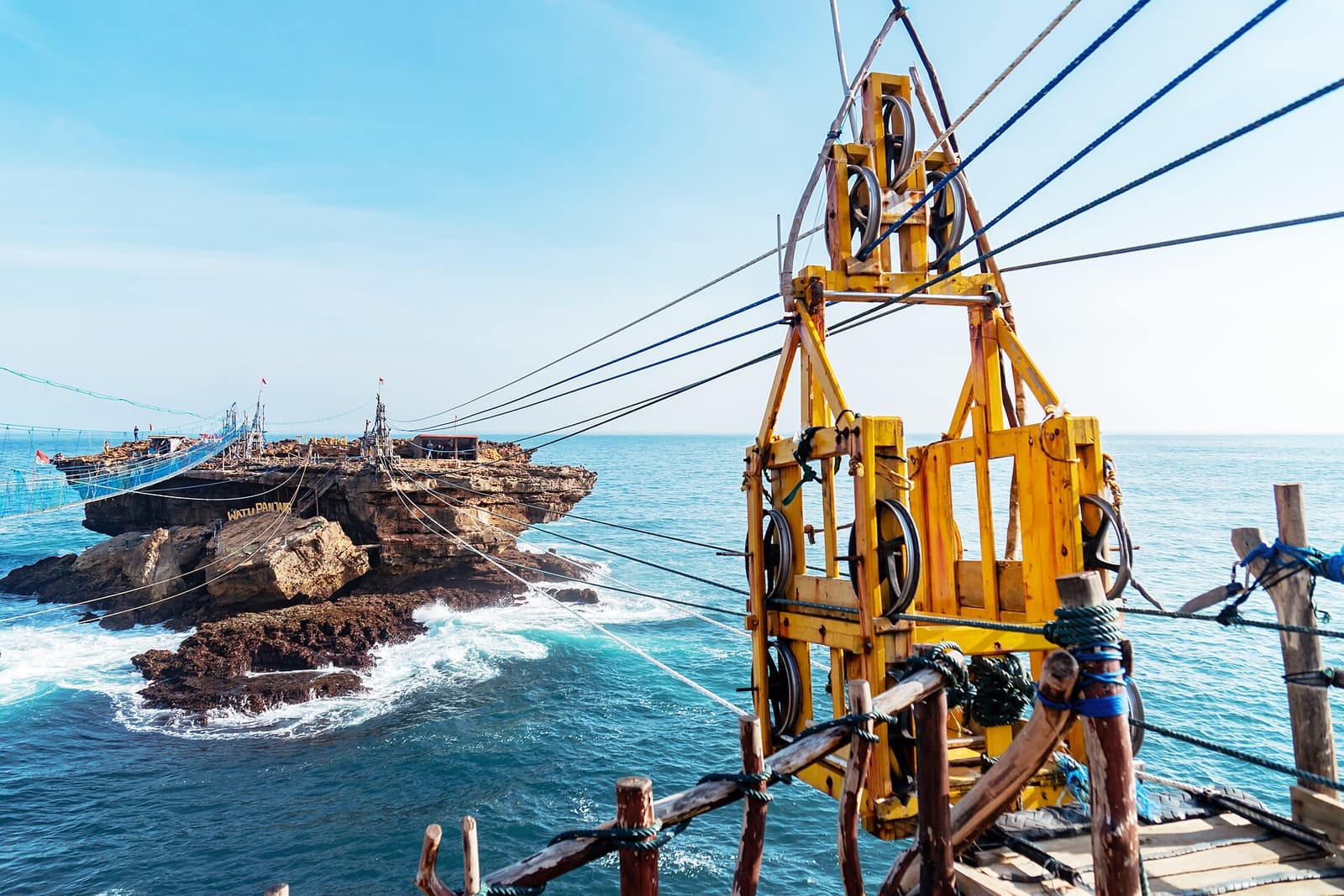
 Timang Beach
A hand-pulled gondola over the surf
On a wild stretch of the Gunungkidul coast, lobster fishermen strung a rope cable car across to a rock island. Today visitors ride the wooden gondola — or walk a suspension bridge — above the breaking waves of the Indian Ocean.
Daily quota and booking
To protect the cave and keep the rope operation manageable, visitor numbers are capped. Published figures vary — from a few dozen to roughly 80–100 people a day — and the limit has been adjusted over time. What matters in practice is that there is one session per morning and that it can sell out in the dry season, on weekends and during Indonesian holidays. Reserve through a tour, your hotel or the operator, ideally several days ahead.
Fitness, age, weight and health
- Fitness: no technical skill is needed, but you must manage steep, slippery ground and a muddy walk of several hundred metres each way.
- Age: limits are set by the operator. School-age children who fit the harness are commonly accepted; toddlers are not. Older visitors in good health do it regularly.
- Weight: because people are lowered and raised by a hand-hauled system, heavier visitors may be asked about their weight, and an upper limit may apply. If you are over about 100 kg, ask before booking.
- Health: not advised in pregnancy, or with heart conditions, uncontrolled blood pressure, recent surgery, back or knee problems, or severe vertigo or claustrophobia.
- Fear of heights: you are sitting in a harness facing the wall, and the descent is short. Many nervous visitors manage; a few decide at the rim that it is not for them.
What to wear
- Lightweight trousers or leggings and a T-shirt you do not mind staining — the clay does not always wash out.
- Long socks to wear inside the rubber boots.
- No jewellery, loose scarves or dangling straps that could catch in the ropes.
- Glasses on a retaining cord; contact lenses are easier.
What to bring
- A complete change of clothes, including underwear and footwear, and a plastic bag for the muddy set.
- A small towel and wet wipes.
- Cash in rupiah.
- A phone or camera in a zipped pocket or small dry bag, plus a lens cloth.
- Water for the drive and sunscreen for the wait at the rim. Large bags stay in the car.
Photography tips
- Lens fog: the cave is far more humid than the car. Let your camera acclimatise and wipe the lens before each shot.
- Exposure: meter for the beam, not the darkness. On a phone, tap on the bright light and drag the exposure down.
- Go wide: the chamber is huge. A wide-angle lens or the 0.5× mode on a phone captures the whole shaft.
- Scale: put a person on the flowstone below the light; a silhouette works best.
- Stability: a small tripod or bracing against a rock makes a real difference. Flash flattens the scene — turn it off.
- Timing: the rays are most defined when there is mist in the air and the sun is high. Be patient; the beam strengthens and fades with passing cloud.
Safety
Jomblang has run for more than a decade with harnesses, helmets, backup lines and an experienced local crew. The main real-world hazards are slips on the mud and steps, so walk carefully and use the handlines. Follow instructions at the rim, do not unclip anything yourself, and tell the guides if you feel unwell. Make sure your travel insurance covers adventure activities.
Rain and closures
In the wet season, roughly November to March, the operator may suspend visits when heavy rain makes the descent or the tunnel unsafe, and the underground river can rise. Closures are decided on the day. See the best time to visit for month-by-month detail.
Money, connectivity and language
- Currency: Indonesian rupiah (IDR). ATMs are plentiful in Yogyakarta and Wonosari; there are none at the cave.
- Cards: rarely accepted in rural Gunungkidul. Bring cash for fees, food and tips.
- Mobile signal: patchy near the cave and absent underground.
- Language: Indonesian and Javanese. Guides speak some English; a few words of Indonesian — terima kasih (thank you), pelan-pelan (slowly) — are appreciated.
- Tipping: not compulsory, but a small tip for the guides and rope team is a kind gesture for hard physical work.
Sample itineraries
One day: the classic
6:00 pickup in Yogyakarta · 8:00 register at Jomblang · 10:00–12:00 the light · 13:00 lunch · 14:30 Pindul cave tubing · 18:00 back in the city.
Three days in Yogyakarta
- Day 1: Borobudur at dawn, back for lunch; the Kraton and Taman Sari or a rest; Malioboro in the evening.
- Day 2: Jomblang and Pindul, or Jomblang and Timang Beach.
- Day 3: Merapi jeep tour in the morning, Prambanan in the late afternoon and the Ramayana Ballet at night.
Two days in Gunungkidul
- Day 1: sunrise at Nglanggeran, Jomblang, Kalisuci or Pindul; overnight in Wonosari or on the coast.
- Day 2: the beaches and Timang, with Sri Gethuk on the way back to the city.
Responsible visiting
- Stay on the marked route in the forest and on the flowstone; both are fragile.
- Take nothing, leave nothing, and do not write on the rock.
- The rope crew, guides and cooks are from the surrounding hamlets — your visit is a significant part of the local economy. Be patient and courteous.