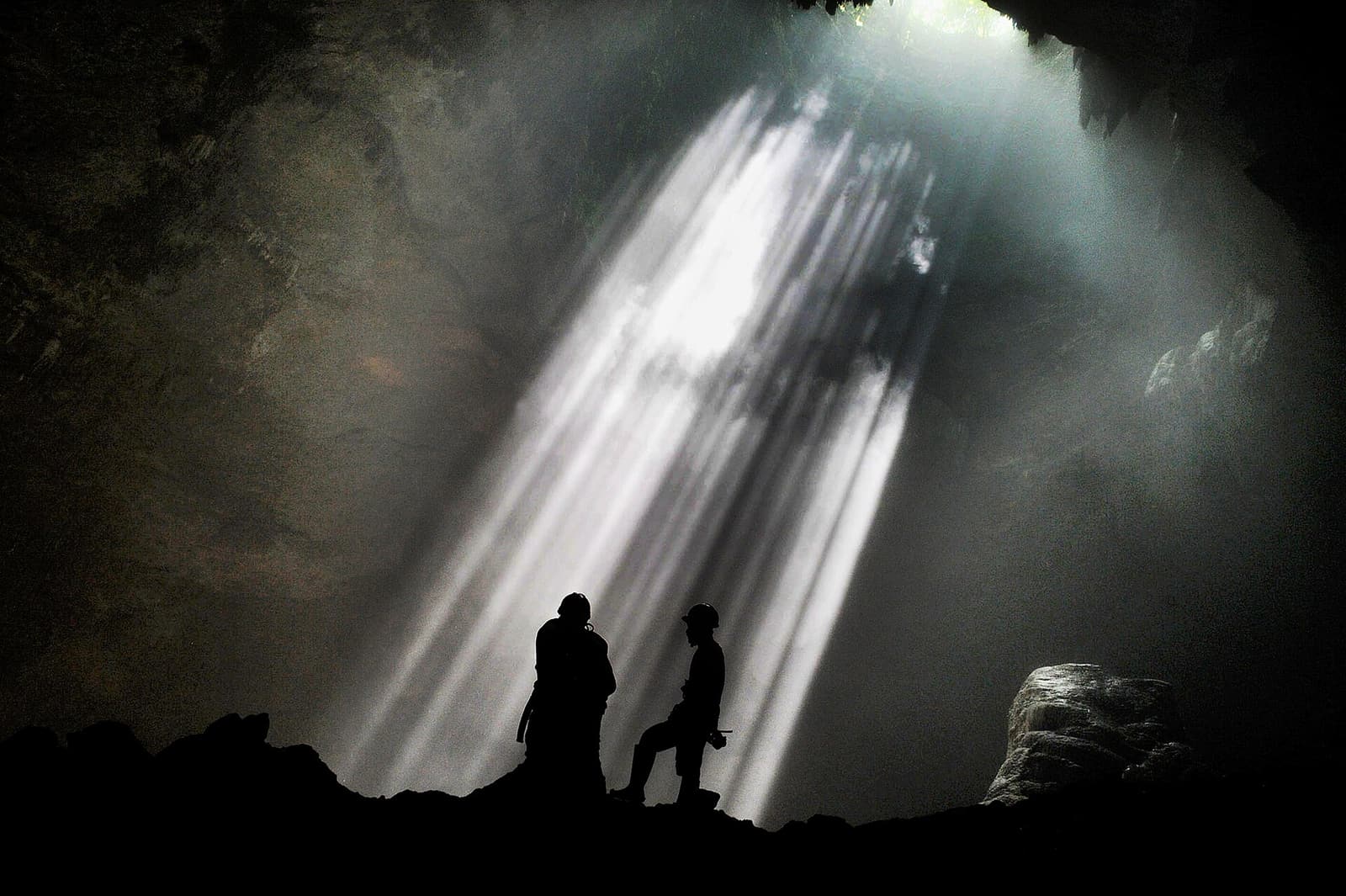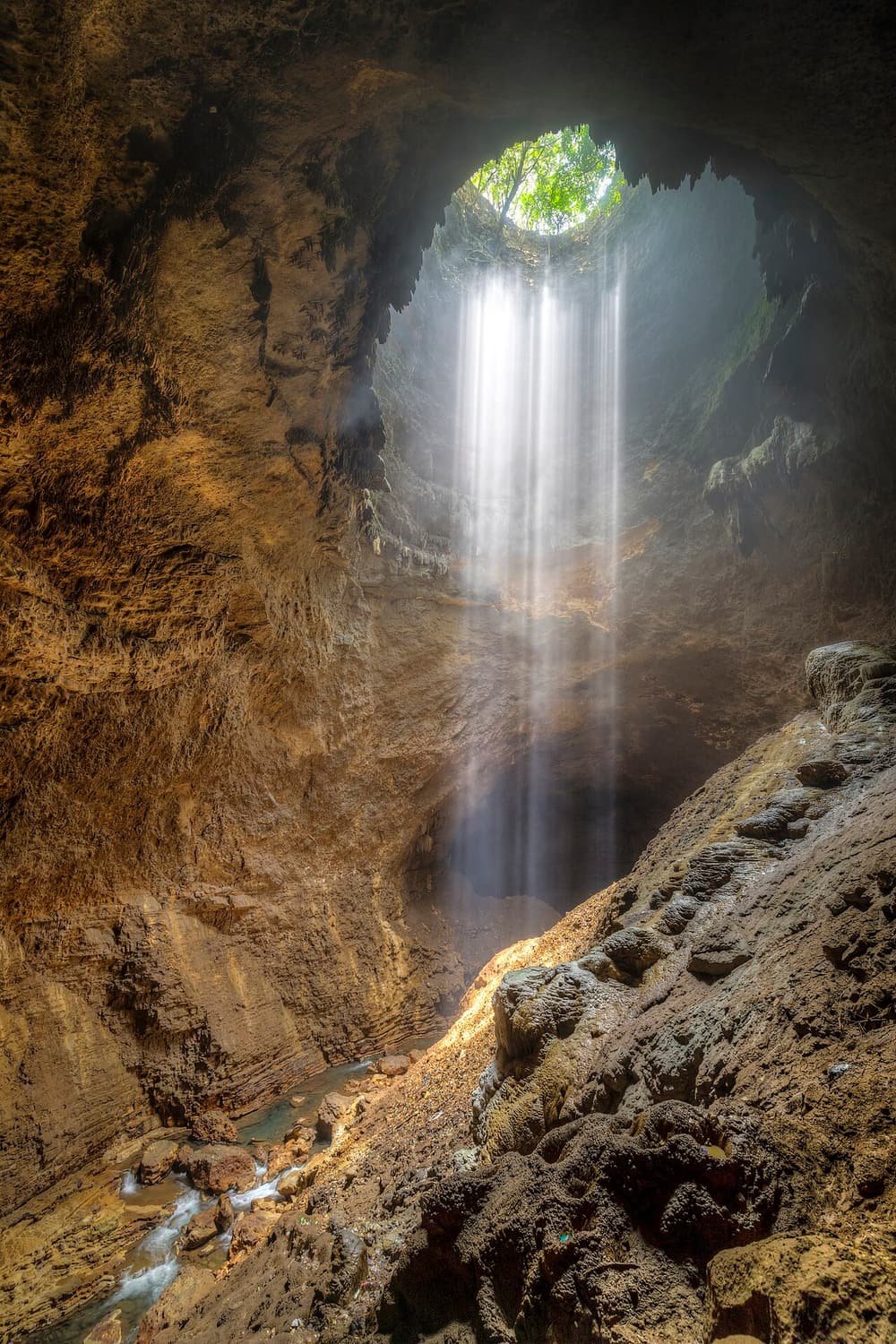
The short answer: come in the dry season, from about May to October, on a weekday, and be in the cave between 10:00 and 12:00. That gives you the best chance of clear skies, a strong light beam, a cave that is open and a tunnel that is merely muddy rather than swampy.
Why the season matters so much here
Java has two seasons. The dry season runs roughly from May to October, with clear mornings and little rain; the wet season from about November to April, with the heaviest rain usually between December and February. Temperatures barely change — around 23–32 °C in Yogyakarta all year, and a little cooler on the Gunungkidul plateau and inside the cave.
At Jomblang the difference is decisive for three reasons. The light of heaven only appears in direct sun. Heavy rain can close the cave for safety. And water levels affect everything else you might combine with it, from Kalisuci to Sri Gethuk.
Month by month
| Months | Weather | Light beam | Crowds | Verdict |
|---|---|---|---|---|
| January – February | Wettest; frequent heavy rain | Unreliable; closures possible | Low | Risky — keep dates flexible |
| March – April | Showers easing, humid | Hit and miss, improving | Low to moderate (Eid holidays vary) | Possible with luck |
| May – June | Dry season begins; clear mornings | Good | Moderate; busy in school holidays | Excellent |
| July – August | Driest and sunniest | Best | Highest — book well ahead | Best light, most people |
| September – October | Still dry; hot, first showers late October | Very good | Moderate | Our favourite |
| November – December | Rains return; storms in the afternoon | Unreliable | Low, then a year-end peak | Go early in the day and hope |
The best time of day
You do not get to choose: the operator runs one session each morning, timed so that visitors reach Grubug Cave when the sun is high enough to shine down the shaft — roughly 10:00 to 12:00. The exact window shifts a little with the time of year. Your job is simply to arrive on time, by about 8:00–8:30. See how to get there.
What if it is cloudy?
On overcast days the visit goes ahead as long as conditions are safe, and the descent, forest and chamber are still impressive, but the rays will be weak or missing. Passing cloud is common even in the dry season; the beam often comes and goes, so wait rather than rushing back. If the light is the main reason for your trip and your dates are flexible, check the forecast the evening before and pick the clearest morning — easiest to do with a tour that has free cancellation.
Rainy-season closures
- The cave may close for the day after heavy overnight or morning rain, when the walls, steps and tunnel become unsafe.
- Closures are decided by the operator on the day, sometimes at short notice.
- The tunnel is deeper in mud and the underground river louder and higher.
- Kalisuci and Oyo River tubing are often suspended; Pindul usually still runs, though the water is brown.
- Afternoon storms are the norm, so morning activities are affected less than you might fear.
When it is busiest
- July and August: European holidays coincide with the best weather. The daily quota fills.
- Indonesian school holidays (mid-June to mid-July and late December) and the Eid al-Fitr (Lebaran) week, whose dates move each year: heavy domestic travel, traffic on the Wonosari road, and full hotels.
- Weekends and long weekends all year, especially at Pindul and the beaches.
- Quietest: weekdays in May, September and October.
Seasons for the rest of your trip
- Borobudur sunrise: clearest in the dry season, often with mist in the valley.
- Ramayana Ballet: the open-air stage at Prambanan is generally used in the dry months, around May to October.
- Merapi: views are best at dawn in the dry season; the summit clouds over by mid-morning in the wet.
- Timang and the beaches: the swell is biggest in mid-year, which is spectacular to watch but can stop the gondola.
- Sri Gethuk: green and clear in the dry season, brown after rain.