Skip to content
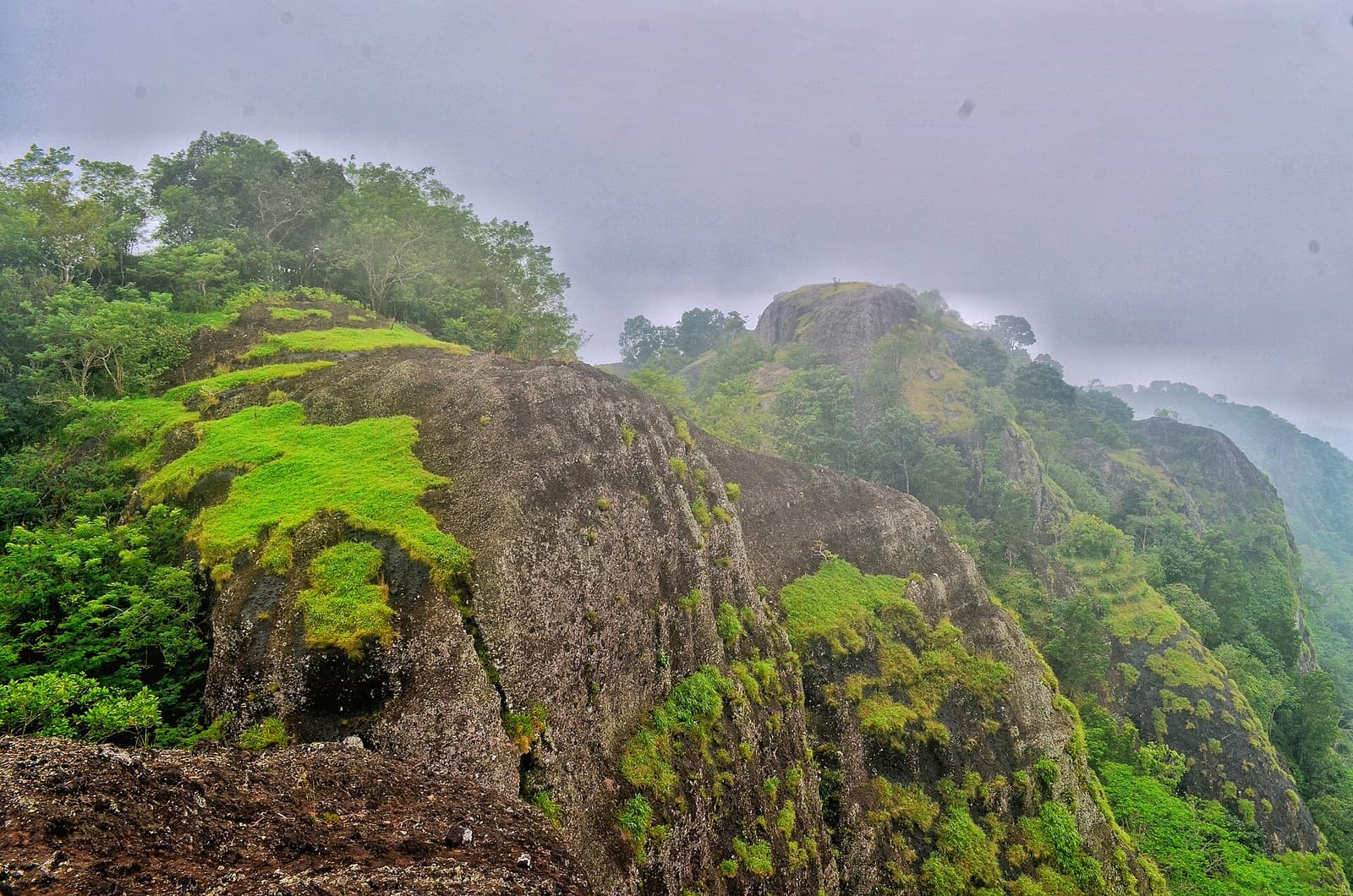
The moss-covered rock domes of the Nglanggeran ancient volcano in the mist

Things to Do Around Jomblang Cave

From the floor of the sinkhole to the temples on the plain: the places worth your time.

A visit to Jomblang takes a morning. What you do with the rest of the day — and the days either side — is what turns it into a trip.

We have grouped the places below into three: what you see inside the cave itself; the caves, rivers, hills and beaches of Gunungkidul, the limestone regency around it; and the temples, volcano and royal city of Yogyakarta, where you will almost certainly be staying. Each page has practical detail, honest tips and the tours that go there.
Inside Jomblang Cave

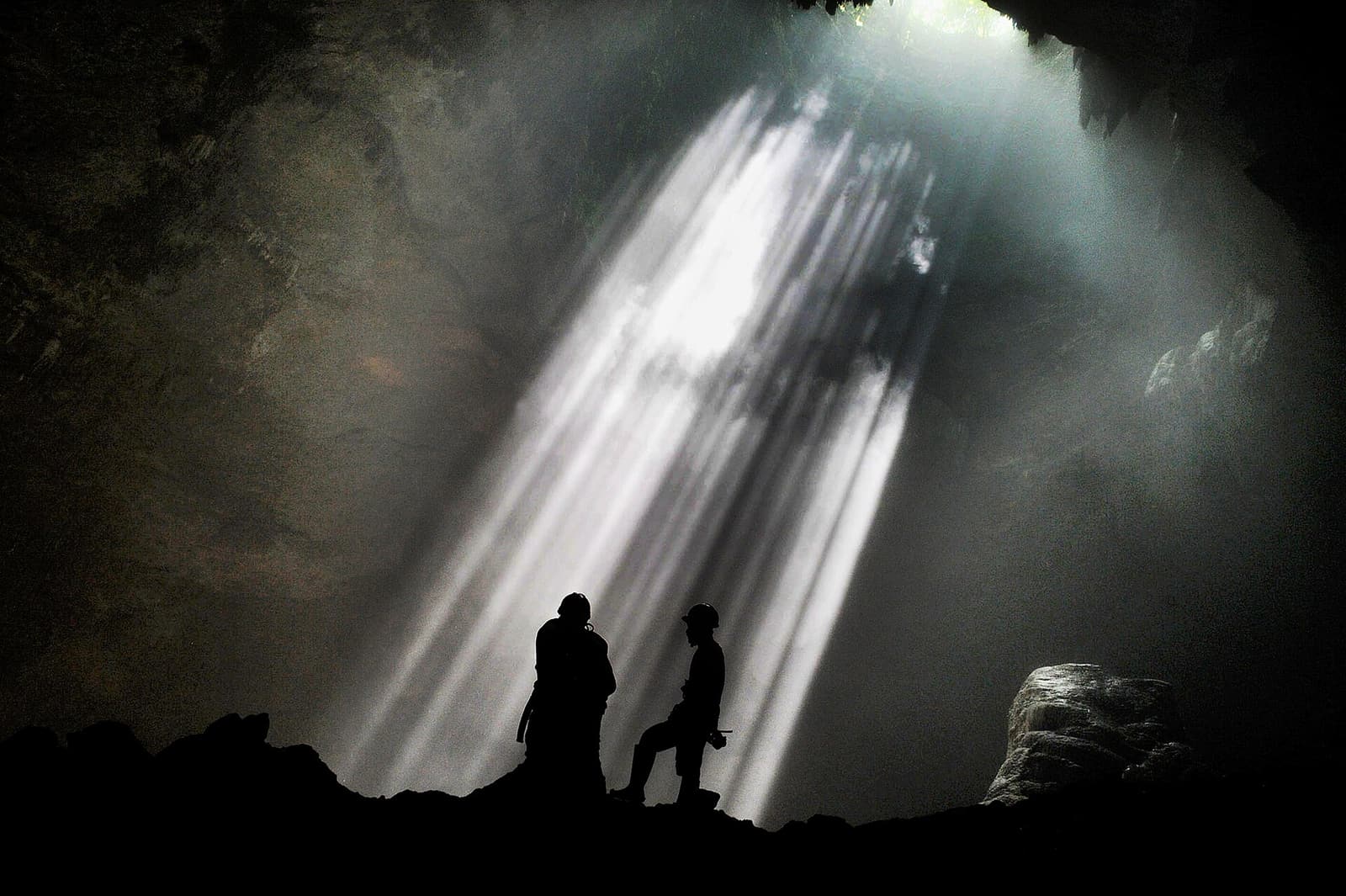
Two visitors silhouetted against the sunbeams falling into the cave at Jomblang Inside Jomblang Cave

Jomblang Cave

A 60-metre rope descent into a collapsed cave

Goa Jomblang is a vertical cave — a sinkhole around 50 metres across, formed when the roof of a cavern collapsed. Visitors are lowered on ropes about 60 metres to a floor covered in forest, then walk through a dark tunnel to neighbouring Grubug Cave, where sunlight falls through the roof in a single beam.

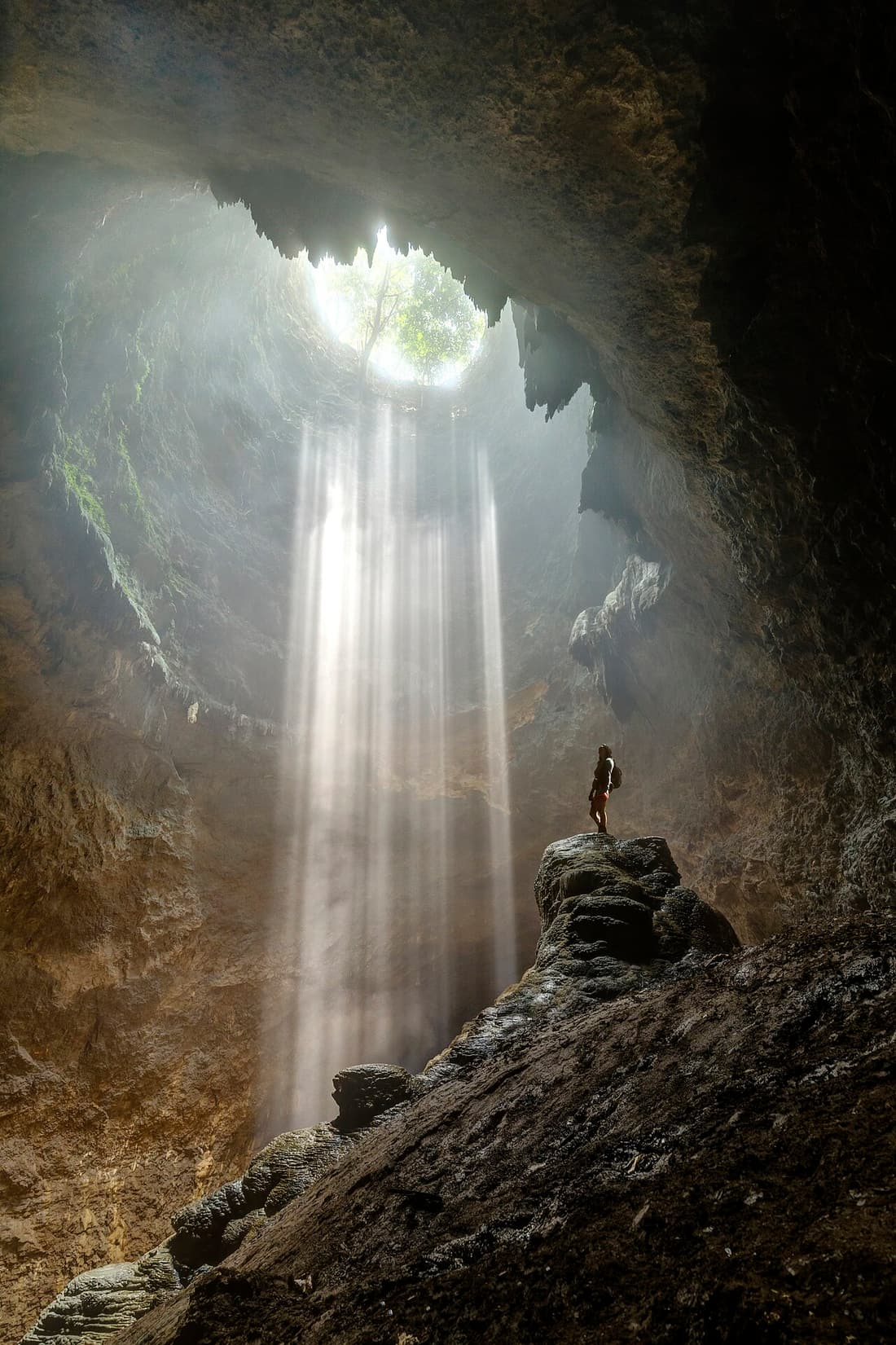
A column of sunlight falling down the shaft of Grubug Cave onto a visitor standing on the rocks Inside Jomblang Cave

Light of Heaven (Grubug Cave)

The sunbeam everyone comes to see

At the end of the tunnel from Jomblang lies Luweng Grubug, a shaft roughly 90 metres deep. Around midday on clear days the sun shines straight down it, and the light catches the mist in the chamber as solid-looking rays — the “cahaya surga”, or light of heaven.

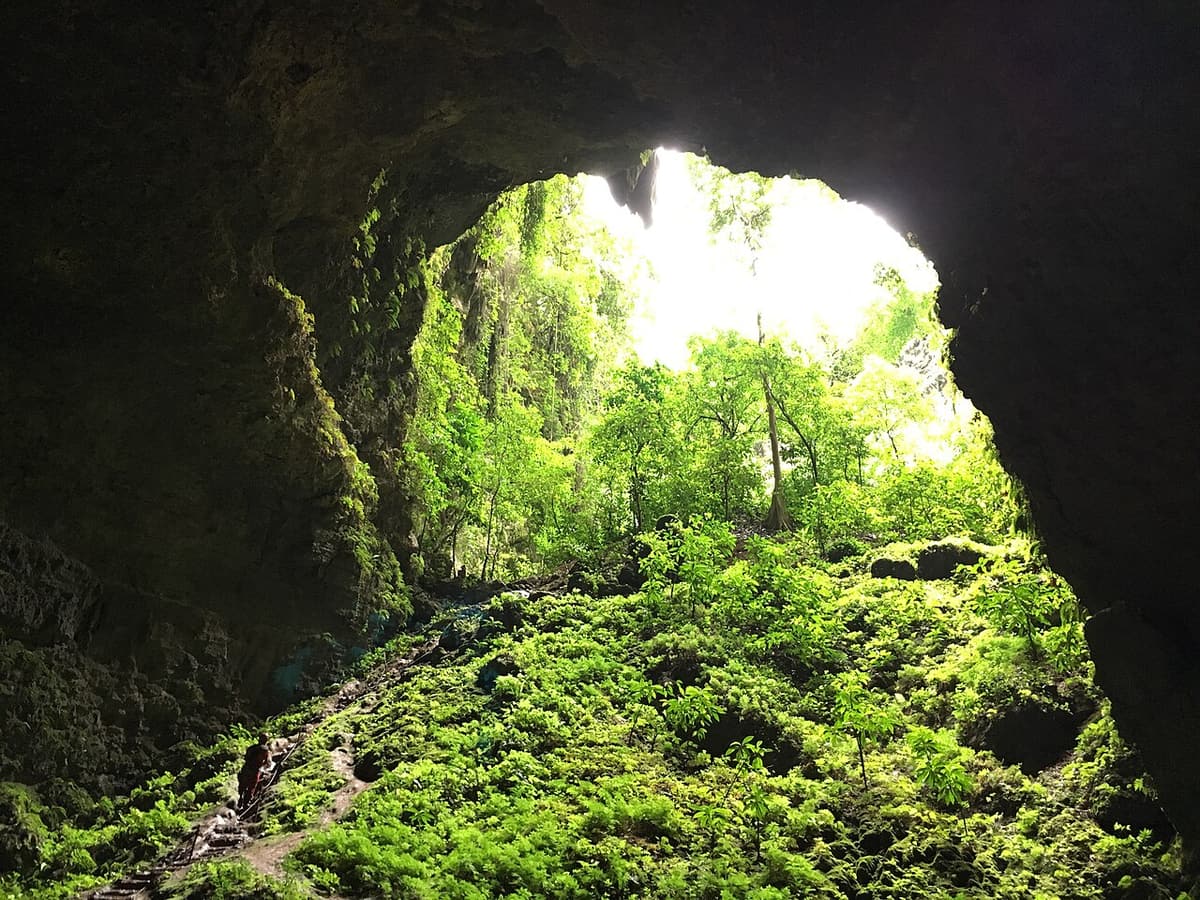
The green forest on the floor of the Jomblang sinkhole seen from the mouth of the tunnel Inside Jomblang Cave

The Ancient Forest

A sunken forest on the cave floor

When the roof of Jomblang fell in, the vegetation on top went down with it. Sheltered, damp and lit only from above, the floor of the sinkhole now carries a dense pocket of ferns, mosses, shrubs and trees quite different from the dry teak country on the surface.

Gunungkidul: caves, coast & karst

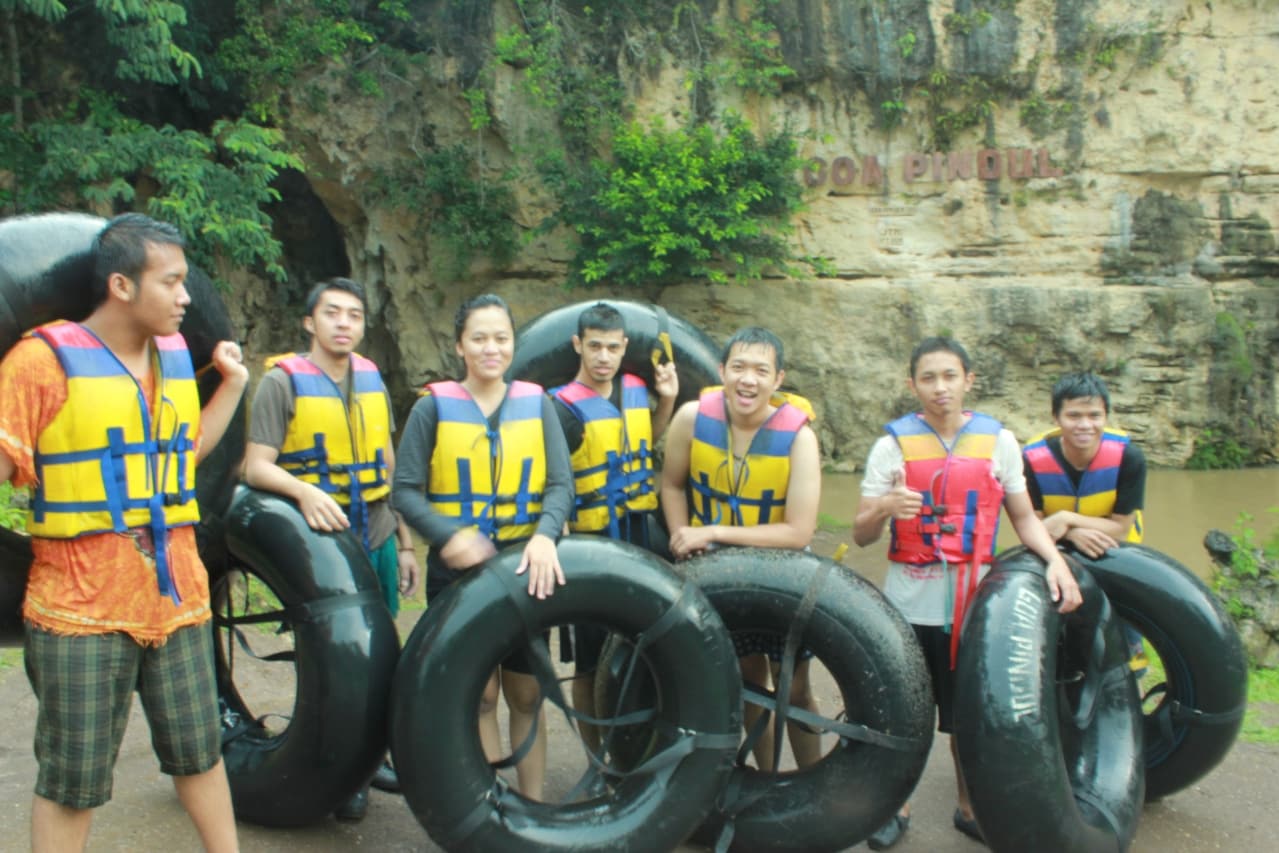
Visitors in life jackets holding inner tubes at Pindul Cave Gunungkidul: caves, coast & karst

Pindul Cave & Oyo River

Float through a cave on an inner tube

Half an hour or so from Jomblang, Gua Pindul is a short flooded cave you drift through in a rubber tube, past stalactites and under a skylight in the roof. Most visitors add tubing on the nearby Oyo River, with its small waterfalls and jumping rocks.

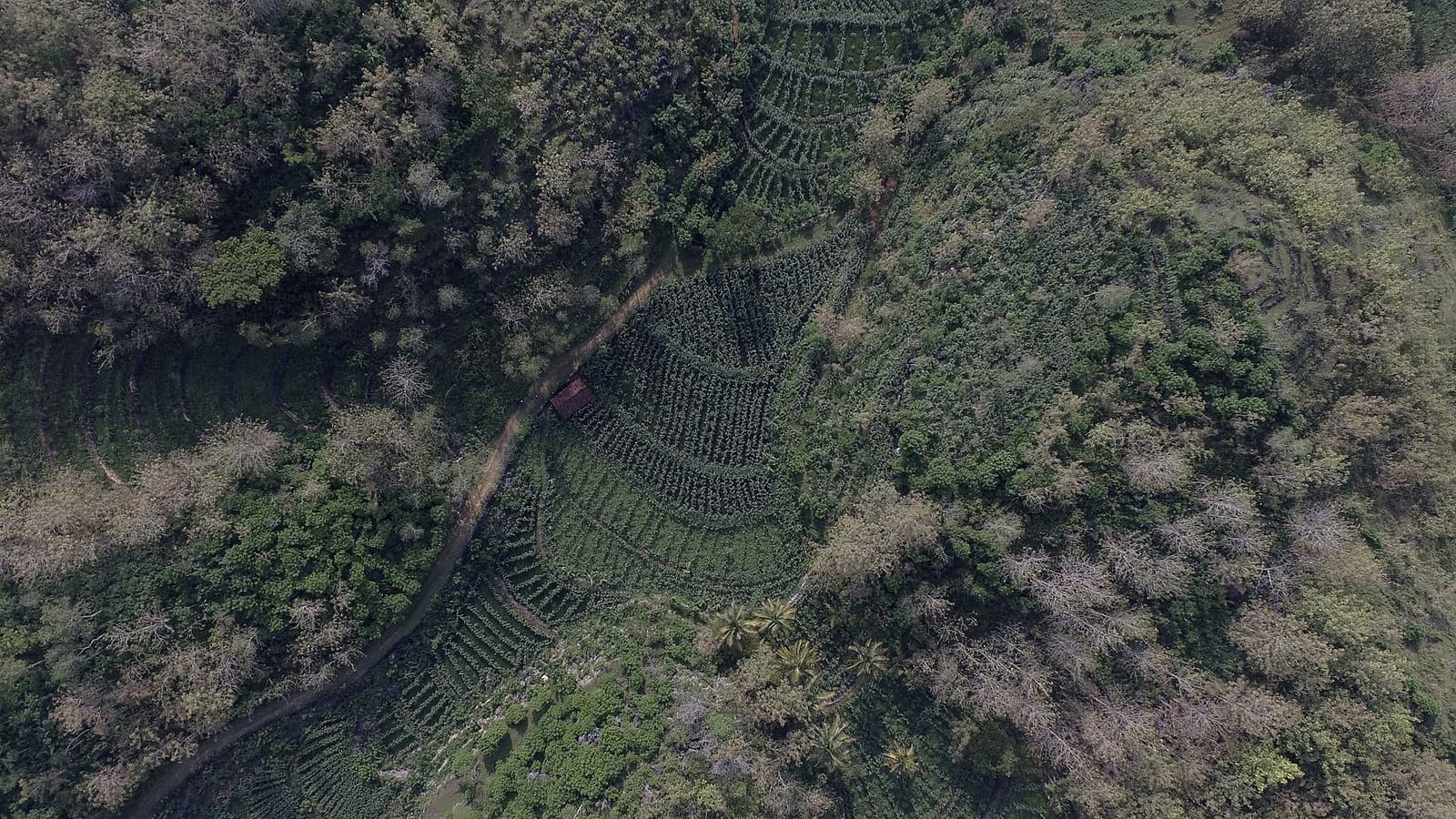
Small fields between rocky limestone hills in the Gunungkidul karst, seen from the air Gunungkidul: caves, coast & karst

Kalisuci Cave Tubing

The wilder, quieter river next door

Kalisuci, in the same village area as Jomblang, is a river that slips in and out of caves at the bottom of a jungle gorge. Tubing here is more adventurous and far less crowded than Pindul, but it depends on the water level and closes after heavy rain.

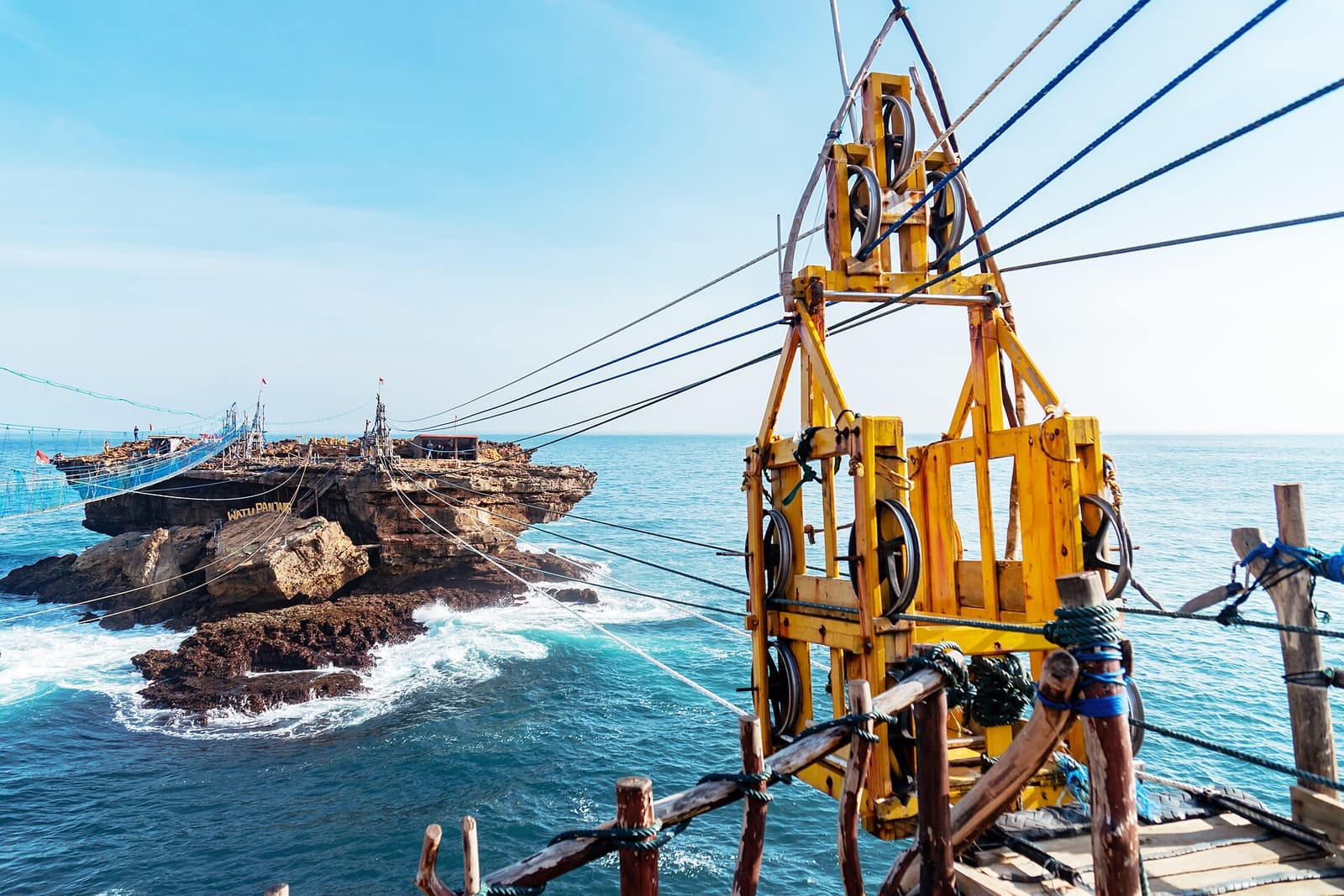
The wooden gondola on its ropes above the sea between the cliff and the rock at Timang Beach Gunungkidul: caves, coast & karst

Timang Beach

A hand-pulled gondola over the surf

On a wild stretch of the Gunungkidul coast, lobster fishermen strung a rope cable car across to a rock island. Today visitors ride the wooden gondola — or walk a suspension bridge — above the breaking waves of the Indian Ocean.

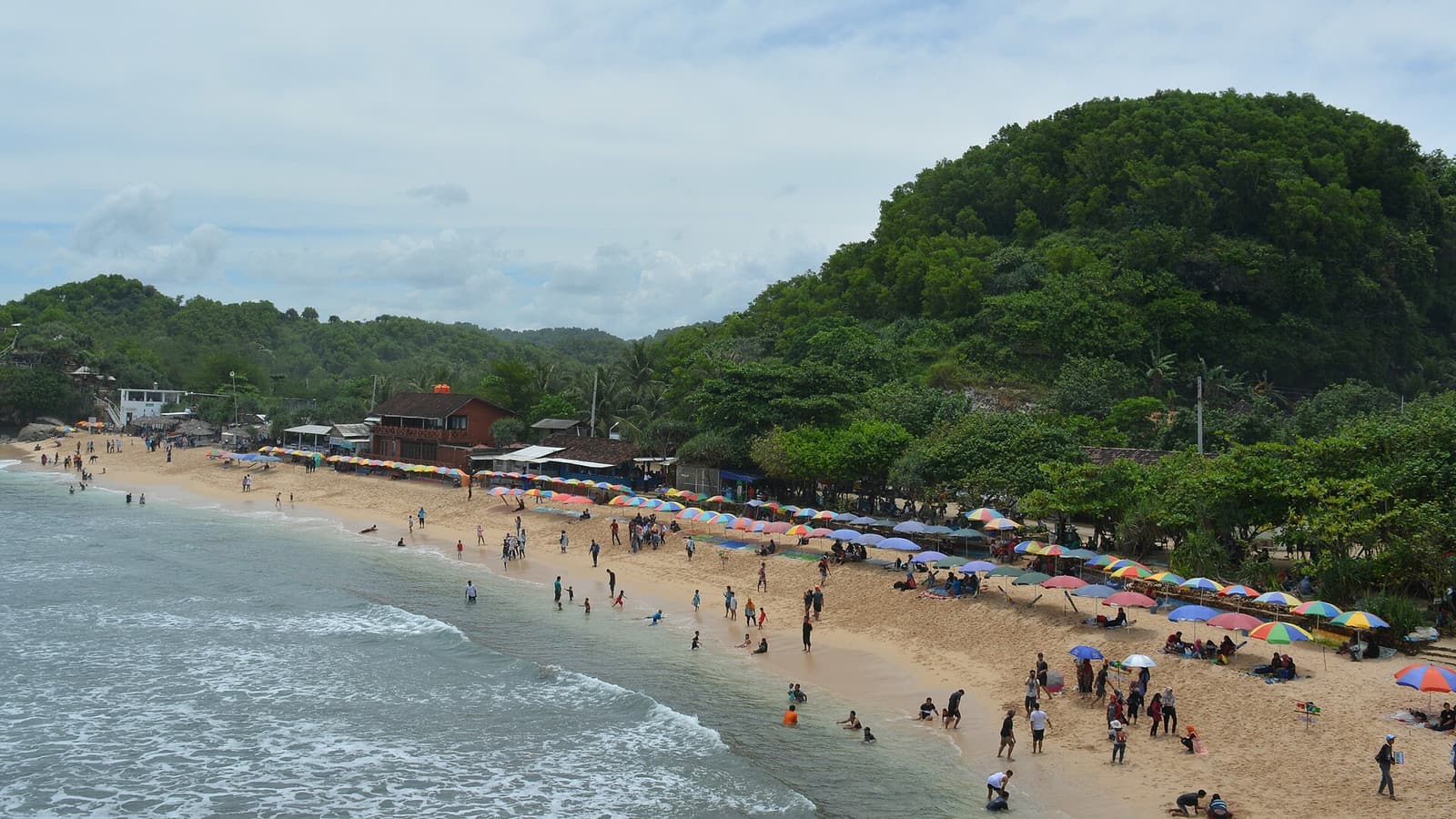
The sandy bay, beach umbrellas and green headland at Indrayanti Beach, Gunungkidul Gunungkidul: caves, coast & karst

Gunungkidul Beaches

White coves between limestone headlands

South of Wonosari the karst plateau ends in a string of small beaches: Baron, Kukup, Krakal, Drini, Sundak, Indrayanti, Pok Tunggal and more. The sand is pale, the cliffs are dramatic and the surf is strong — places to walk, eat seafood and watch the ocean rather than swim far.

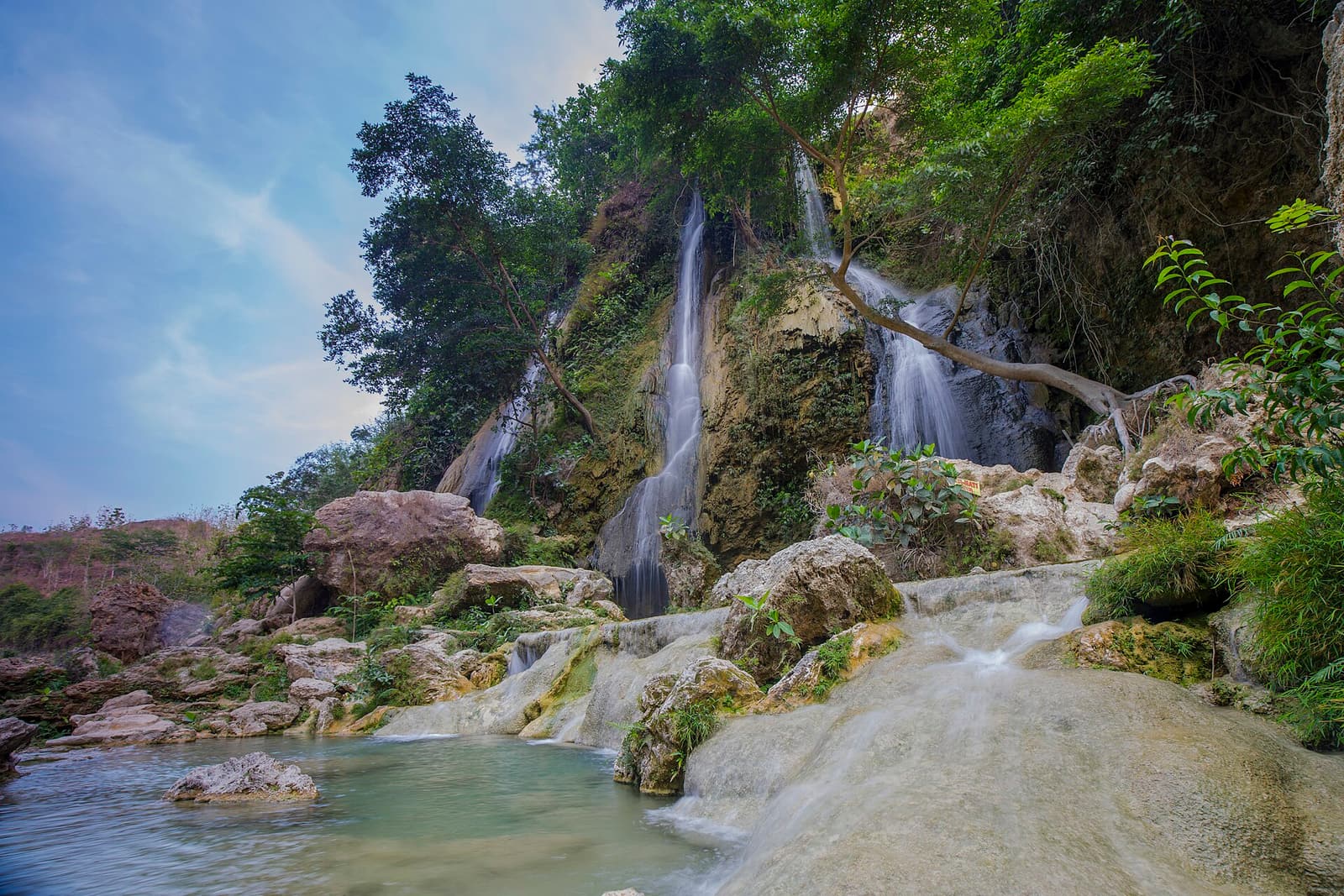
Sri Gethuk waterfall cascading over limestone ledges into the river Gunungkidul: caves, coast & karst

Sri Gethuk Waterfall

A waterfall straight into the Oyo River

At Bleberan village, water from springs on the plateau drops over tiered limestone ledges directly into the green Oyo River. You reach the falls on a short raft ride or a path through the fields, and in the dry season the pools are good for a swim.

Yogyakarta & the temples

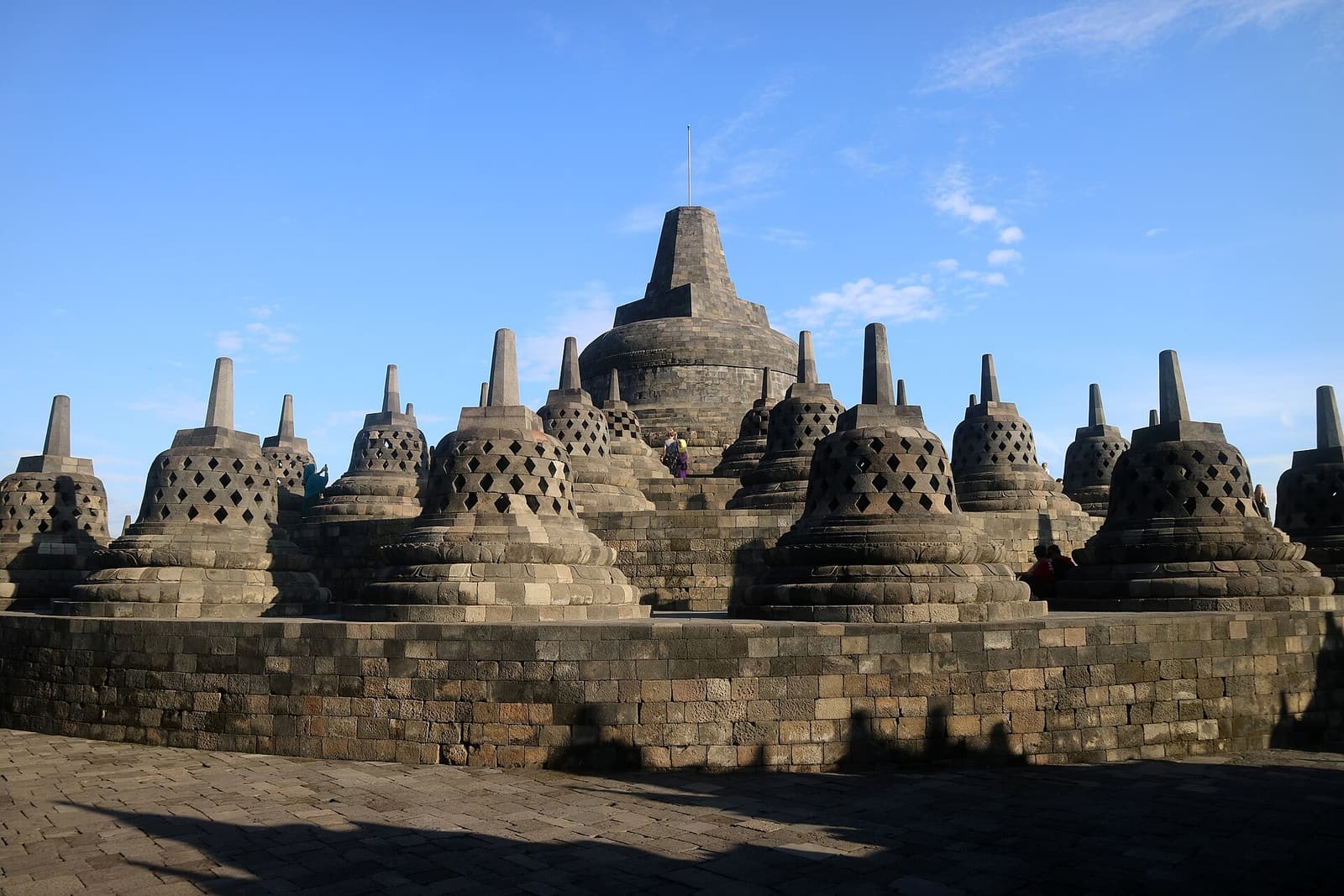
The central stupa and rings of smaller stupas on the upper terrace of Borobudur Yogyakarta & the temples

Borobudur

The world’s largest Buddhist monument

Built in the 9th century and rediscovered under volcanic ash and jungle a thousand years later, Borobudur is a stone mountain of galleries, reliefs and bell-shaped stupas north-west of Yogyakarta. Access to the upper levels is limited by a daily quota, so book ahead.

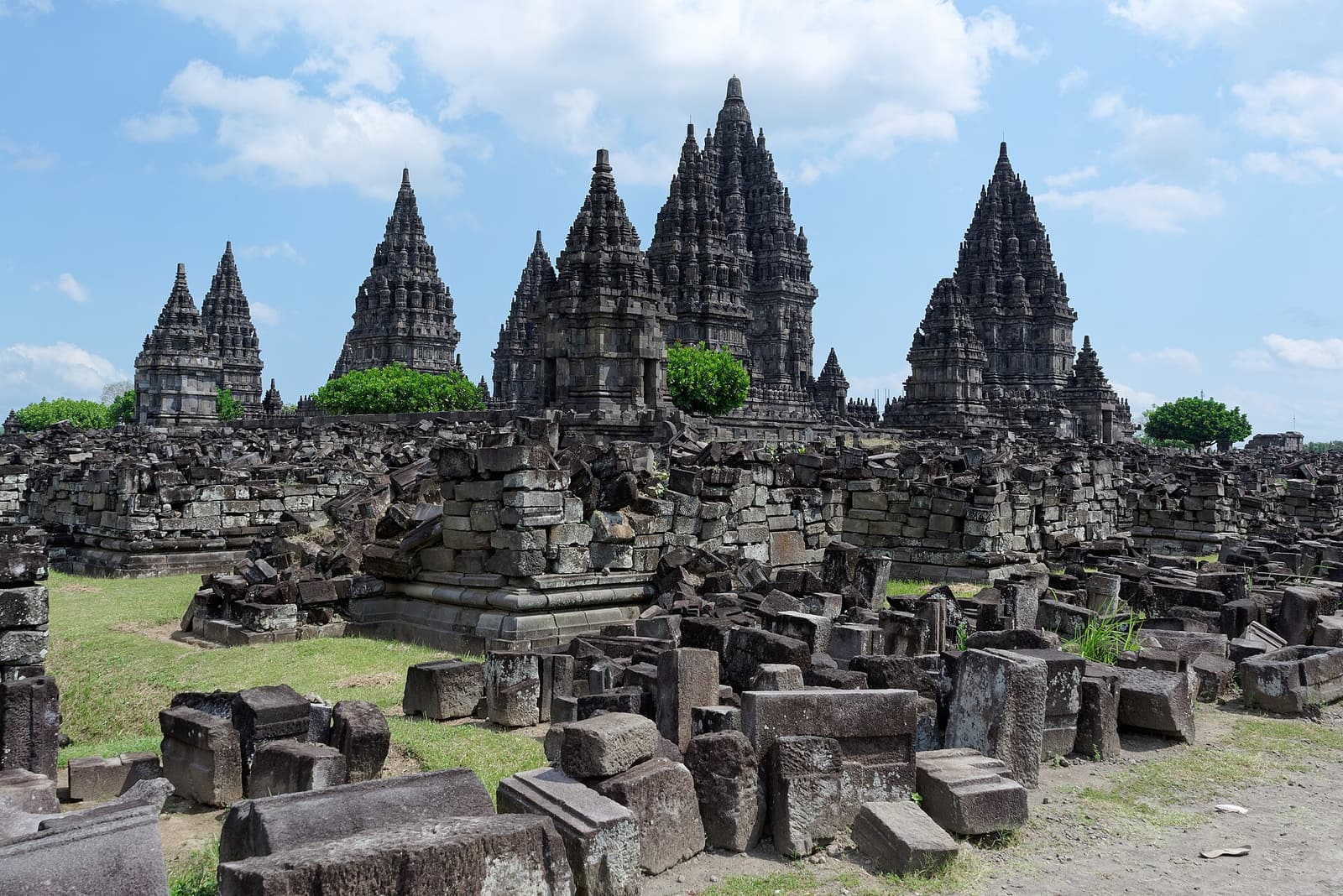
The stone towers of the Prambanan temple compound Yogyakarta & the temples

Prambanan & the Ramayana Ballet

Java’s great Hindu temples, and a show beneath them

The 9th-century Prambanan compound, with its 47-metre Shiva temple, stands on the eastern edge of Yogyakarta — conveniently on the way back from Gunungkidul. In the evening, the Ramayana is performed as a dance-drama on a stage facing the temples.

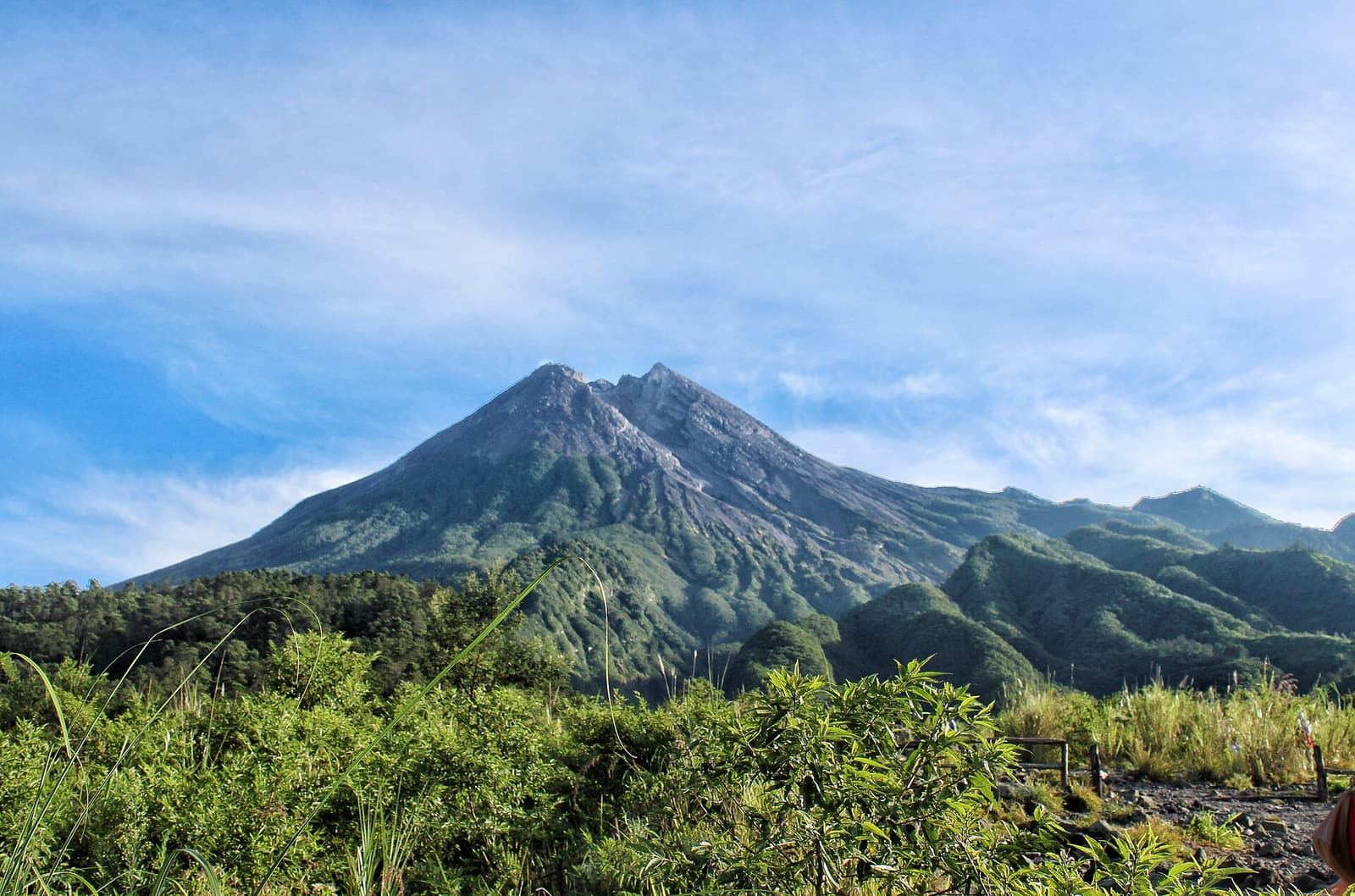
The cone of Mount Merapi seen from its southern slopes Yogyakarta & the temples

Mount Merapi

The volcano on Yogyakarta’s horizon

Merapi, around 2,900 metres high, is one of Indonesia’s most active volcanoes and looms over the city from the north. Visitors explore the lava fields of its 2010 eruption by open jeep, and in active periods watch glowing lava from safe viewpoints at night.

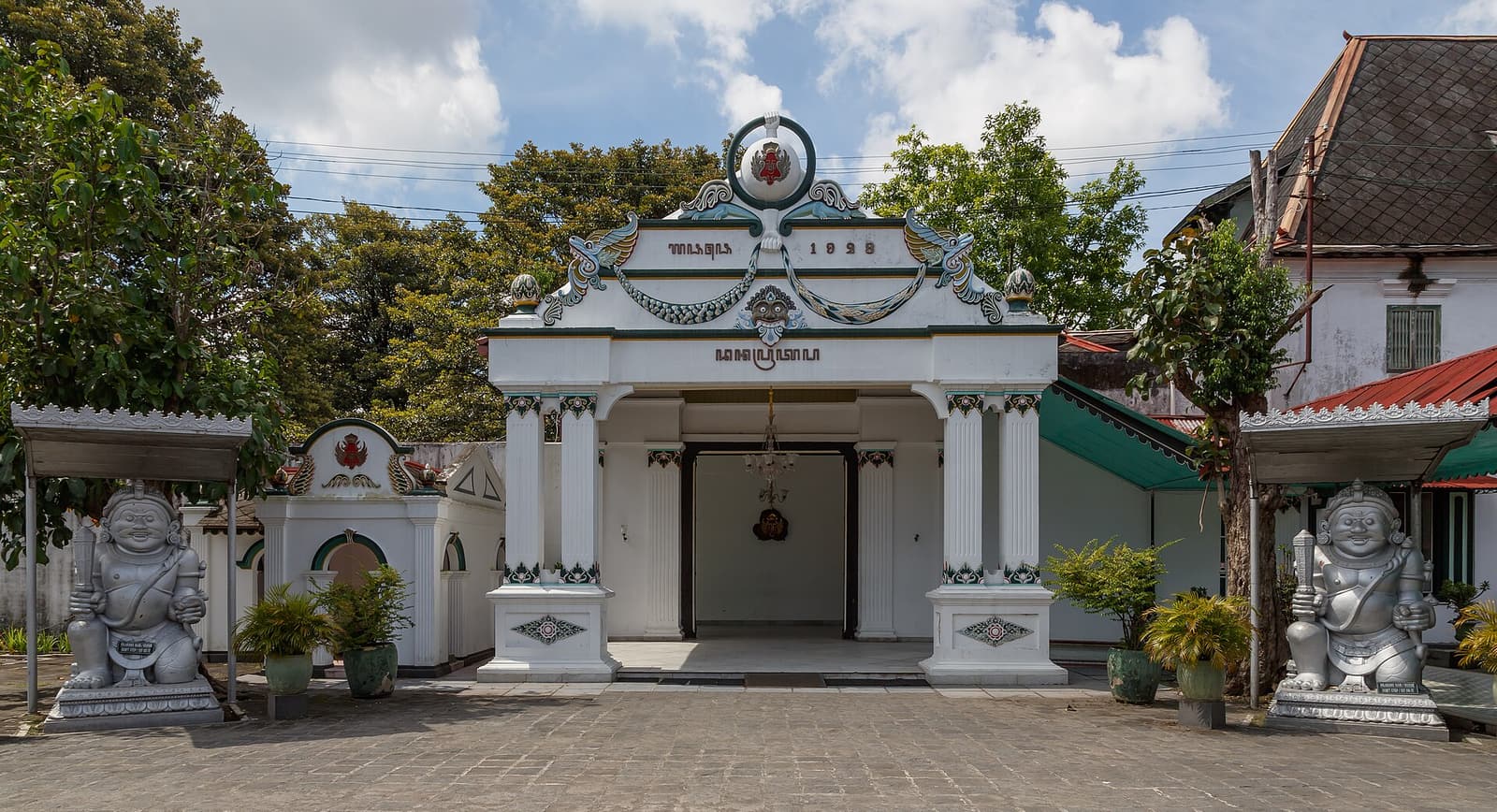
The Donopratono gate and its guardian statues at the Kraton, the sultan’s palace in Yogyakarta Yogyakarta & the temples

Yogyakarta City

The sultan’s city: Kraton, Taman Sari and Malioboro

Yogyakarta — Jogja — is the base for almost every Jomblang trip and a destination in itself: a working royal palace, the ruined pleasure gardens of Taman Sari, batik and silver workshops, student cafés and the endless street market of Malioboro.

How to put them together

  • Same day as Jomblang: Pindul or Kalisuci (closest), Timang or a beach (further south), Prambanan (on the way back).
  • Before Jomblang: sunrise at Nglanggeran or, with a pre-dawn start, Merapi.
  • A separate day: Borobudur, which lies on the opposite side of Yogyakarta and needs its own morning.
  • Half-days in town: the Kraton and Taman Sari in the morning, Malioboro in the evening.

For sample day-by-day plans, see the travel guide; to compare organised trips, see the best tours.

Plan your Yogyakarta adventure

Stand in the light of heaven

Places in the cave are limited each morning. Compare the best-rated Jomblang tours from Yogyakarta, add Pindul, Timang Beach or the temples, and book in a couple of taps.